A Brief History
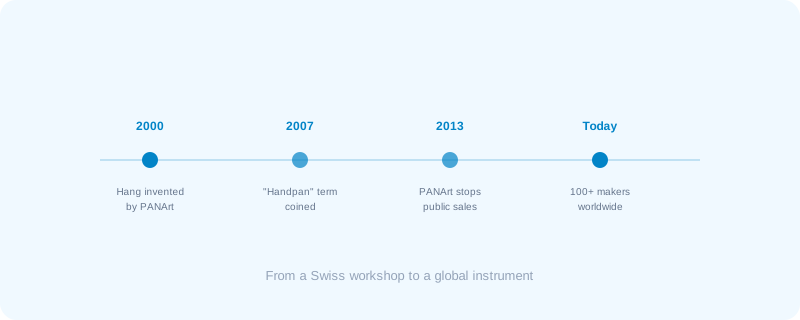
The handpan started with the Hang — invented in 2000 by Felix Rohner and Sabina Schärer at PANArt in Bern, Switzerland. They took the concept of the Caribbean steelpan and reimagined it into a UFO-shaped instrument you play with your hands.
The Hang was revolutionary. Nothing sounded like it.
PANArt stopped selling to the general public in 2013, which created massive demand and a long waitlist. This sparked dozens of other makers around the world to create their own versions — which became collectively known as handpans.
Hang vs. handpan: "Hang" is a specific instrument by PANArt. "Handpan" is the generic term for all similar instruments. It's like Kleenex vs. tissue — same idea, different branding.
How It Works
A handpan is two half-shells of steel glued together. The top shell (called the Ding side) has a central note and 7-9 surrounding tone fields arranged in a circle. The bottom shell has a hole called the Gu that serves as a bass resonator.
When you strike a tone field with your fingers, the steel vibrates at specific frequencies. Each note is hand-tuned by the maker — hammered and shaped until it resonates at the exact right pitch.
The anatomy
- Ding — the raised center note on top (usually the lowest note)
- Tone fields — the dimpled areas around the ding (each is a different note)
- Shoulder — the edge between tone fields (produces a "tak" percussion sound)
- Gu — the hole on the bottom (bass resonance)
Why It Sounds So Special
Most handpans are tuned to pentatonic scales — five-note scales where every note sounds good with every other note.
This is the secret. You literally can't play a wrong note.
Hit any combination of notes and it sounds harmonious. This is why beginners can make beautiful music within minutes. The instrument is designed to be forgiving.
Common scales you'll encounter: D Minor (Kurd), Celtic Minor, D Major, Pygmy, Amara. Each has a different emotional character — from melancholic to uplifting.
The Handpan Sound
It's hard to describe in text. If you haven't heard one yet, go to YouTube and search "handpan music." Give it 30 seconds.
The sound is:
- Warm and resonant — like a steel drum crossed with a singing bowl
- Meditative — there's a reason it's used in sound healing and yoga
- Intimate — it's not loud. It's a personal instrument
- Overtone-rich — each note produces layers of harmonics that ring out and blend together
Once you hear it, you'll understand why people call it addictive. Once you play it, you'll understand why people don't put it down.
Now that you know what a handpan is, the next question is: how do you choose the right one?