You have your handpan. You're sitting down. Now what?
The most important thing: relax. Tension is the enemy of good handpan sound.
Sitting Position
Place the handpan on your lap, on a stand, or on a soft surface. Most people start with it on their lap:
- Sit comfortably — cross-legged on the floor, or in a chair with the pan on your thighs
- The ding (center note) should face you
- The handpan should feel stable — not wobbling or sliding
- Keep your back relaxed but upright
Tip: A handpan stand is worth the investment. It frees your legs, lets you sit more comfortably, and gives better resonance than your lap.
The Three Strikes
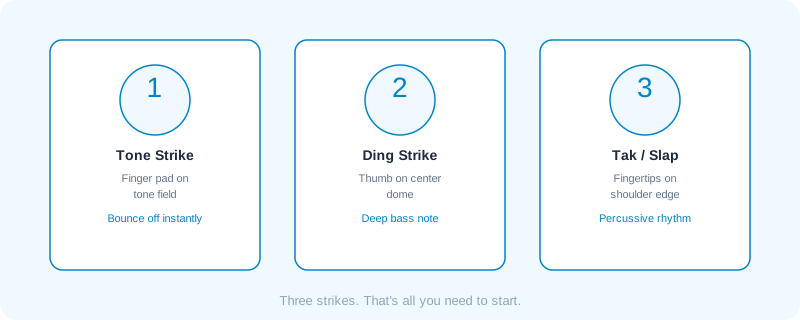
Everything in handpan playing comes from three basic strikes:
1. Tone strike (finger pad)
The most important technique. Strike the tone field with the fleshy pad of your finger (between fingertip and first knuckle). Think of it like a quick bounce — you touch the surface and immediately lift off. Don't press or hold.
2. Ding strike (thumb or finger)
The center dome is played differently. Use your thumb or the pad of your index finger. Strike gently — the ding is sensitive and produces a deep, resonant bass note.
3. Tak / slap (fingertips on the shoulder)
The shoulder is the raised edge between tone fields. Strike it with your fingertips for a percussive "tak" sound — no melody, just rhythm. This is how you add groove to your playing.
The Golden Rule
This is the single most important thing to get right. Think of your fingers like drumsticks — they bounce off the surface. The faster you lift, the longer and cleaner the note rings.
Hand Position
Common beginner mistakes:
- Striking too hard (more force ≠ better sound)
- Keeping fingers on the surface too long (mutes the note)
- Using flat palms instead of fingertips
- Tensing up shoulders and arms
The right approach:
- Keep wrists loose and relaxed
- Fingers should be slightly curved, not flat
- Let gravity do most of the work — you're guiding your hand down, not hammering
- Start very gently. The handpan responds to light touch
Your First Exercise
Exercise: The circle
Play each note around the handpan, one at a time, clockwise. Start with the ding (center), then move to each tone field around the circle.
- Play slowly — one note every 2 seconds
- Focus on getting a clean, ringing tone from each note
- Listen to each note ring out fully before playing the next
- Do this for 5 minutes
This simple exercise teaches you where every note is and how each one sounds. It also trains your striking technique.
Left Hand, Right Hand
The tone fields alternate between left and right sides of the handpan (in most layouts). This means:
- Notes on the left side → left hand
- Notes on the right side → right hand
- The ding (center) → either hand
Don't worry about hand independence yet. For the first few weeks, just focus on clean strikes with either hand. Coordination comes naturally with practice.
The first week is about touch, not music. Get comfortable with the instrument. Learn where the notes are. Train your fingers to bounce. The music comes after.
Now let's put these techniques into practice with real exercises and simple melodies.