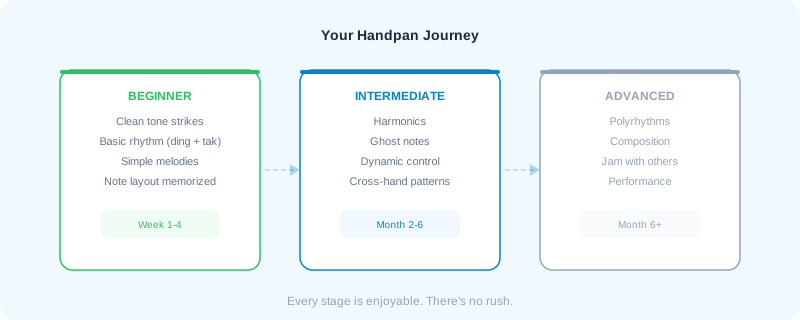
Once you're comfortable with basic strikes and simple patterns, a whole new world opens up.
I'm still early in this journey myself — but here's what I've learned about what comes next.
Harmonics
Every tone field on a handpan doesn't just play one note. If you strike it in a specific spot (usually the edge of the dimple), you can produce a harmonic — a higher, bell-like overtone.
How to find harmonics: Strike the very edge of a tone field with just your fingertip. Use a lighter touch than normal. The harmonic is a higher-pitched, ethereal sound. Not every strike will produce it cleanly — it takes practice.
Harmonics add sparkle and texture to your playing. They sound magical when used sparingly.
Ghost Notes
Ghost notes are very soft strikes — barely audible. They fill the space between your main notes and create a sense of flow.
Think of them like whispers between words. The listener might not consciously hear them, but they feel the difference.
Try this: Play your normal pattern, but add barely-there taps between the main notes. Your playing immediately sounds more fluid and professional.
Playing with Dynamics
The secret to sounding good
Dynamics — the variation between loud and soft — is what separates "playing notes" from "making music."
- Start a phrase softly, build up, then release
- Accent certain notes — hit one note in a pattern slightly harder
- Use silence — leave gaps. Not every beat needs a note
- Breathe with your playing — let phrases have beginnings and endings
The handpan responds beautifully to dynamics. A whisper-soft note followed by a confident strike creates more emotion than playing everything at the same volume.
Cross-Hand Patterns
Once your hands are comfortable on their respective sides, try reaching across:
- Right hand plays a note on the left side
- Left hand plays a note on the right side
This opens up patterns that aren't possible with standard positioning. It looks cool too.
Don't rush into this. Get your basic hand independence solid first. Cross-hand patterns are intermediate territory — trying them too early builds bad habits.
Taking Care of Your Handpan
Maintenance matters. A handpan is a precision instrument. Neglect will degrade the sound and tuning over time.
- Wipe it down after every session. Sweat corrodes steel. Use a microfiber cloth.
- Oil nitrided steel regularly. Use Phoenix Oil or similar handpan-specific oil every few weeks. Stainless/ember steel needs less.
- Store in a padded case away from extreme heat, cold, and humidity.
- Never leave it in a hot car. Heat can warp the steel and detune the notes.
- Expect retuning eventually. Even quality handpans drift over time. Budget $150-300 for a professional retune every few years.
The Handpan Community
One of the best things about this instrument is the community. Handpan people are genuinely welcoming.
Where to connect:
- Facebook groups — "Handpan Community," "Handpan Players & Enthusiasts" — great for advice, buying/selling, and finding local players
- YouTube — endless tutorials and performances. Start with Malten, then explore others
- Handpan festivals — Canarias Handpan Festival (Canary Islands), Pangonia (Berlin), Pantasia (California), Sound-Sculpture Festival (Germany)
- Local jams — search your city + "handpan" on Facebook or Meetup
Playing with others is a completely different experience. Handpans in the same scale harmonize naturally. Two handpan players jamming together can create something truly special.
Online Learning Resources
Where to learn
- Malte Marten (Malten) — my top recommendation. Playful, emphasis on individuality. YouTube + paid fundamentals course
- David Kuckhermann (Handpan Dojo) — Grammy-nominated percussionist, 200+ videos, structured curriculum, weekly live Q&A
- Master the Handpan — progressive courses from multiple top players including Kuckhermann and Marten
- Hang Massive — the duo whose viral videos introduced millions to the handpan. Great for inspiration
- NovaPans — beginner-friendly lesson series with notation system
Where I Am Now
I'm one month in. Here's what I can do:
- Clean strikes on all tone fields
- Basic rhythm patterns with ding + tak
- Simple 3-4 note melodies
- Very basic improvisation
Here's what I can't do yet:
- Harmonics consistently
- Cross-hand patterns
- Playing along with other musicians
- Anything that looks impressive on YouTube
And that's fine. The handpan isn't a race. Every session sounds a little better than the last one.
Final Thoughts
What I've learned in one month
- The handpan is incredibly rewarding for beginners. You sound decent fast. That keeps you motivated.
- Structured practice beats noodling. 20 minutes with focus > 2 hours without direction.
- Buy a decent instrument. A cheap handpan will hold you back and frustrate you.
- Find a teacher. Malten's approach clicked for me. Find one that clicks for you.
- Play every day. Even 10 minutes. Consistency is everything.
The handpan found me at a time when I needed something that wasn't a screen. No code. No business. Just sound.
If you're considering picking one up — do it. You won't regret it.
The best time to start was yesterday. The second best time is now.
Enjoy the journey.