The Origin Story
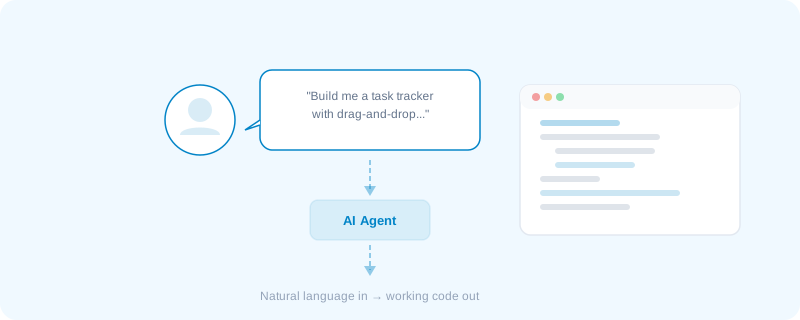
In February 2025, Andrej Karpathy tweeted about a new way he'd been writing software. Instead of carefully crafting each line of code, he was describing what he wanted in plain English and letting AI generate the implementation.
He called it "vibe coding."
The term exploded. Within months, Merriam-Webster listed it as trending slang. By the end of 2025, Collins Dictionary named it Word of the Year.
But vibe coding isn't just a buzzword. It describes a genuine paradigm shift in how software gets built.
How It Works
At its core, vibe coding is simple:
- You describe what you want in natural language
- AI generates the code
- You review, test, and iterate
- Repeat until it works
You're no longer the person writing code. You're the person directing it — like a film director who doesn't hold the camera but decides every shot.
The Paradigm Shift
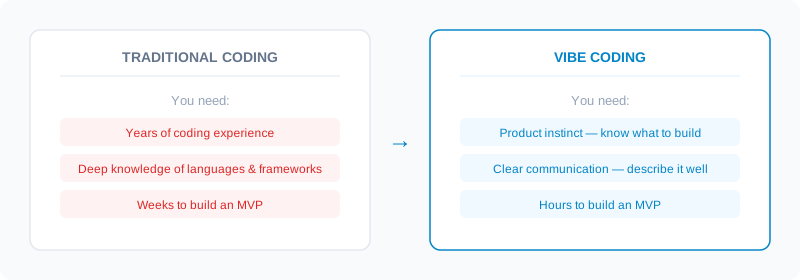
For decades, building software required one thing above all: knowing how to code. The better you were at writing code, the more you could build.
Vibe coding changes the equation. What matters now is:
- Product instinct — knowing what to build
- Clear communication — describing what you want precisely
- Judgment — knowing when the AI output is good enough and when it's not
- Taste — recognizing quality in the result
Key insight
The technical skill of writing code hasn't become irrelevant. But it's no longer the bottleneck. Clear thinking is.
What It Is NOT
Let's clear up some misconceptions:
It's not "no code." The code still exists — AI writes it. You're not using drag-and-drop builders. You're generating real, production-grade code.
It's not magic. You can't just say "build me a startup" and get a working product. The quality of your output depends entirely on the quality of your direction.
It's not just autocomplete. GitHub Copilot suggesting the next line is useful, but it's not vibe coding. Vibe coding is when AI handles entire features, files, or even full applications from your descriptions.
The Evolution: From "Vibes" to "Agentic Engineering"
By late 2025, even Karpathy moved beyond the term he coined. He started calling the next phase "agentic engineering" — a more structured approach where you:
- Write detailed specifications before prompting
- Review AI output like a senior engineer reviewing a junior's pull request
- Use multiple AI agents in sequence for different tasks
- Exercise systematic oversight rather than just "vibing"
This evolution matters. The early days of "just vibe it" worked for prototypes. Building real products requires more discipline — but still fundamentally less manual coding than before.
Why This Matters
If you can describe what you want clearly, you can now build it. That's new. That's significant. And that's what the rest of this guide will help you do effectively.